GRAPE VARIETIES & CELLAR WORK
OUR WINES.
Seven main white and four main red varieties make up our winery’s grape selection. This diversity offers different ways to discover wine and gives you room to explore your own preferences.
Alongside our choice of varieties comes careful handling. From harvest to storage, we see every step as part of one consistent commitment to quality.

OUR MAIN VARIETIES
WHITE & RED.
DIVERSITY AT THE WINERY.
WHITE GRAPE VARIETIES
Grüner Veltliner, Welschriesling, Pinot Blanc, Müller-Thurgau, Sauvignon Blanc, Yellow Muscat and Chardonnay.
RED GRAPE VARIETIES
Blaufränkisch, Zweigelt, St. Laurent and Merlot.

PROCESSING & STORAGE
CARE ALL THE WAY
TO DELIVERY.
Our winery is equipped with modern cellar technology. It helps us handle the grapes gently and carefully control the subsequent stages in the cellar.
Our commitment to quality begins with gentle harvesting and extends through processing to bottling and storage. What matters to us is the whole sequence of these steps: quality should be preserved right through to delivery.

TASTE
WHAT DO YOU LIKE
IN YOUR GLASS?
Aroma, acidity, body and tannin shape how we perceive a wine. Acidity can make it feel lively and fresh. Body describes how light or full it feels in the mouth. Tannin can create a dry, slightly astringent sensation on the palate.
These characteristics do not exist in isolation. A strong aroma, for example, does not automatically mean a heavy wine. Notice how your first impression changes as you taste and which sensations are in balance with one another.
WINE & FOOD
LET THE FOOD
PLAY ITS PART.
When pairing wine with food, it helps to consider how the dish is prepared. A gently steamed dish makes a different impression from one that is deeply roasted. Sauce, roasted flavours, herbs and spices can be just as important to the wine choice as the main ingredient.
Try a sip on its own first, then another after a bite of food. Does the wine now seem softer, more astringent or fresher? This direct comparison makes the pairing easier to understand than a fixed rule that only distinguishes between meat, fish and vegetables.


TAKE TIME TO TASTE
ONE GLASS.
MORE TO DISCOVER.
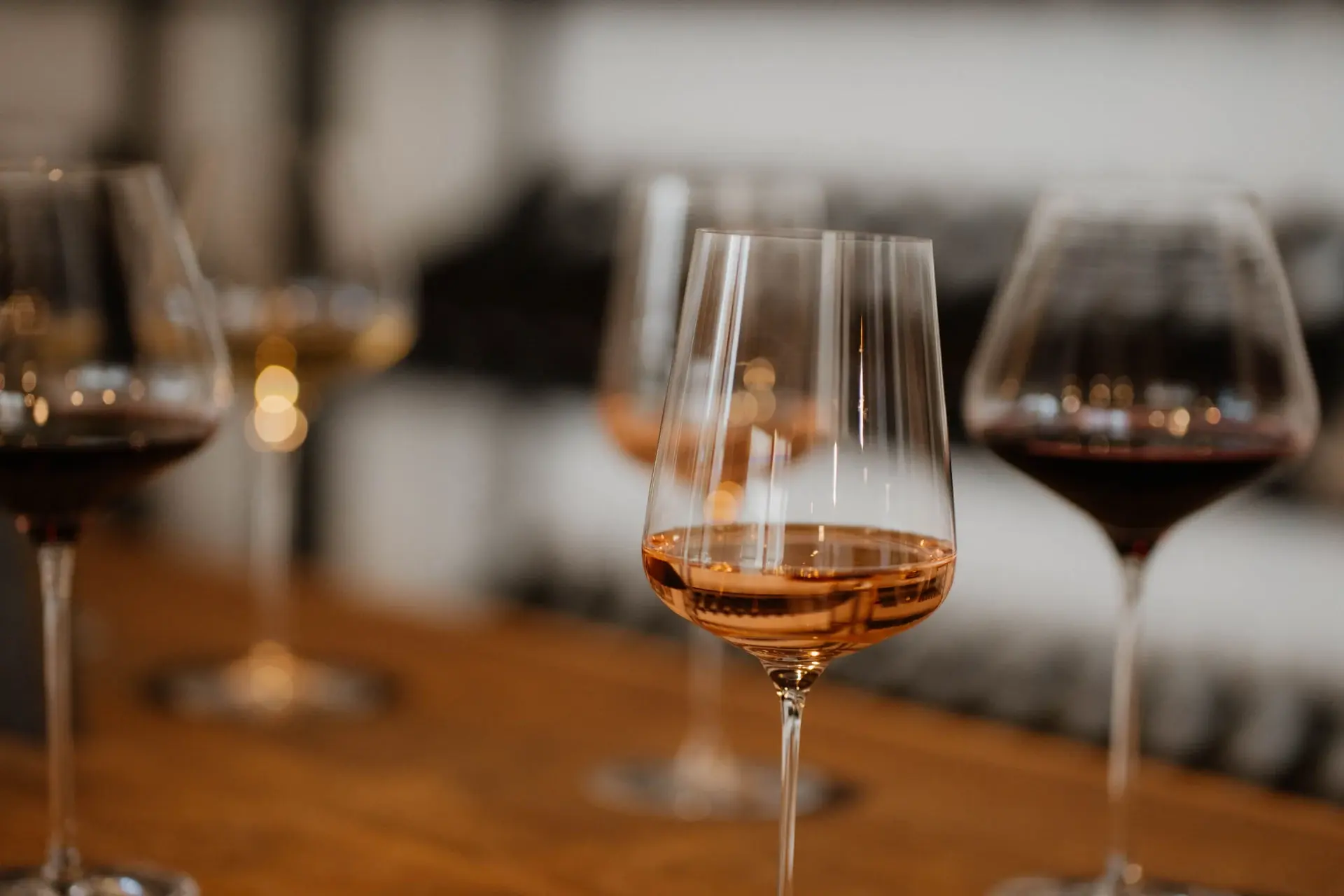
Start by taking a moment to notice the aroma. Gently swirl the glass and smell it again. A little air can reveal different impressions. A small sip then helps you distinguish freshness, fullness and the finish.
Temperature also changes the impression: when a wine is very cold, aromas often recede; as it warms, it reveals itself differently. Observe this development in the glass. It is about your own perception, not about finding as many technical terms as possible.
COMPARE & REMEMBER
CAPTURE
THE IMPRESSION.
Tasting several wines side by side often makes differences easier to recognise than tasting a single bottle. Small pours and a glass of water between wines help keep the impressions distinct. A short note on aroma, mouthfeel and finish makes the comparison easier to recall later.
If you would then like to know which of our wines might suit your discoveries, you can reach us through the enquiry form.
ASK ABOUT OUR WINES